


Send us your inquiry
We are always here to help you out and provide you with solutions. Should you have any special requirements or inquiry, please fill the form below and we will get back to you as soon as possible.


E-mail: sale@mingliangkj.com
Tel: +86 15965364558
As competition in the medical aesthetics industry becomes increasingly intense in 2026, laser hair removal is no longer simply a question of whether your clinic offers the service. The real question is whether your device is stable enough, safe enough, and suitable enough for long-term commercial use.
For clinics, a truly outstanding commercial laser hair removal device should do far more than simply emit energy and perform treatments. It must also balance treatment results, patient comfort, equipment stability, operational safety, post-sale maintenance costs, and long-term profitability.
When selecting equipment, many clinics fall into the same trap: focusing only on specifications while ignoring real commercial value, or focusing only on price while overlooking long-term costs. In reality, whether a device is truly worth investing in usually depends on the following key factors.
For clinics, a laser hair removal device is not a short-term display product, but a business tool that must withstand long-term, high-frequency use. When it comes to quality, what really matters is not the “high power” or “high energy” highlighted in brochures, but the device’s output stability during continuous treatments, failure rate, component lifespan, and overall system consistency.
A device suitable for commercial use should have several key features:
First, a stable core emission system.
Laser hair removal fundamentally relies on stable energy output. If the energy fluctuates significantly from pulse to pulse, both treatment experience and results may be affected, and the risk of burns or post-inflammatory pigmentation may increase. FDA regulation of medical laser products also emphasizes that laser devices involve not only medical device requirements, but also radiation safety performance requirements.
Second, key components must withstand high-frequency use.
Commercial clinic use is entirely different from home use. A machine may operate continuously for hours every day, and even more intensively during peak seasons. If the cooling system, handpiece, filters, connection structure, or power supply system are not reliable enough, the losses caused by downtime, repairs, and interrupted appointments can easily exceed the money saved at the time of purchase.
Third, overall build quality and assembly must be reliable.
Truly high-quality equipment is often evident in the details: a solid body structure, a stable and comfortable handpiece grip, secure interface connections, well-designed airflow channels, a responsive screen, and convenient replacement of consumables. These details may seem minor, but they determine whether the device can truly perform under high-frequency commercial use.
So when evaluating “quality,” clinics should not only ask, “How powerful is the machine?” They should also ask:
Can this machine maintain stable energy output over the long term?
Will the energy decline during continuous operation?
Can the cooling system keep up during peak treatment hours?
What are the handpiece lifespan, maintenance rate, and replacement cost?
True commercial-grade quality means your clinic can confidently schedule a full calendar of appointments, rather than dealing with frequent after-sales issues after only a few months.
Laser hair removal is an energy-based treatment, and safety must always come first. The American Academy of Dermatology points out that when laser hair removal is performed improperly or by inexperienced operators, it may cause burns, permanent pigment changes, and scarring. Proper pre-treatment evaluation and standardized operation are therefore essential.
For this reason, a commercial laser hair removal device suitable for clinics must incorporate safety not only in the machine itself, but also in the treatment workflow.
At a minimum, the device should include the following safety features:
Contact cooling or an efficient cooling system to reduce the risk of epidermal thermal injury
Clear parameter settings to avoid operational errors
Logical treatment settings based on skin type and energy level
Complete emergency stop functions, warning alarms, and status indicators
A secure connection between the handpiece and the main unit to avoid treatment interruption or abnormal energy emission
The FDA also has clear radiation safety performance requirements for laser products, including basic protective design requirements such as protective housing.
Device safety is not only about the machine itself, but also about the safety of the entire treatment system. OSHA notes that laser exposure can cause injury to both the eyes and skin, with the eyes generally being more vulnerable.
Therefore, when purchasing equipment, clinics should not only focus on the machine itself, but also confirm:
Whether professional protective eyewear is included
Whether indications and contraindications are clearly documented
Whether operator training is provided
Whether it is easy to establish a standardized treatment process
Whether the system supports graded parameter management for different skin tones and hair types
Simply put, a truly safe device does not merely “claim to be safe.” It helps clinics manage risk in a more systematic way.
Many buyers are easily attracted by terms such as “single wavelength,” “triple wavelength,” or “quadruple wavelength.” However, from a clinic management perspective, the key issue is not just the number of wavelengths, but whether the wavelengths truly fit your patient base.
Different wavelengths vary in penetration depth, melanin absorption characteristics, and suitability for different hair types. Clinically, what clinics should really focus on is this: Are your target clients more likely to have light, fine hair, or coarse, dark hair? Do you mainly serve lighter skin types, or do you also treat darker skin tones?
Whether a device can cover a wider range of skin tones and hair types directly affects your treatment scope and repeat business potential.
In addition, laser hair removal is not a one-time permanent solution. It usually requires a treatment course. The AAD also emphasizes that patients should receive professional consultation and evaluation before treatment, and follow proper pre- and post-treatment care instructions, such as avoiding sun exposure and using sun protection.
Therefore, when evaluating “results,” clinics should pay closer attention to the following:
Whether parameters can be adjusted flexibly for different skin tones and hair types
Whether energy output remains stable
Whether the cooling system is sufficient to support a more comfortable treatment
How efficient the device is for large treatment areas
Whether there are more suitable treatment heads for smaller, delicate areas
Whether the device supports standardized treatment course management
A truly excellent hair removal device is not one that only performs well during a demonstration, but one that can deliver reproducible, sustainable, and standardized results in real clinical practice.
In 2026, patients no longer expect only “effective” hair removal. They want treatments that are effective, comfortable, fast-recovery, and pleasant overall.
Many clinics have no problem attracting leads for hair removal, but once patients hear words like “pain,” “burning,” or “irritation,” conversion rates often drop. The key factor behind this is often device comfort.
Comfort mainly comes from three aspects:
First, cooling capacity.
The better the cooling, the more it helps reduce epidermal heat sensation and improve patient acceptance.
Second, pulse rhythm and parameter logic.
If device parameters are too complicated, and doctors or operators find them difficult to use, the treatment experience can easily become inconsistent.
Third, treatment efficiency.
A large spot size, reasonable repetition rate, and smooth operation can shorten each treatment session, reduce patient fatigue, and improve clinic turnover efficiency.
From a business point of view, comfort is not an extra selling point. It is a real conversion tool.
A device with a high level of comfort often means:
Easier first-session conversion
Greater willingness for patients to complete the full course of treatment
More repeat business and referrals
Better support for premium treatment packaging and higher-value services
In the end, a commercial laser hair removal device is not used by the purchasing manager. It is used by frontline staff in the clinic.
If the interface is complicated, the learning curve is steep, and mode switching is cumbersome, two problems usually arise:
Training cycles become too long, and new staff may hesitate to use the machine
Treatment performance becomes too dependent on one experienced staff member, making it difficult to replicate and scale
Therefore, when choosing equipment in 2026, clinics must pay close attention to usability:
Is the interface clear and intuitive?
Are key parameters easy to understand at a glance?
Does it provide logical treatment settings for different body areas, skin tones, and hair types?
Is it easy to train new staff?
Does it support the creation of a unified SOP?
The American Academy of Dermatology also clearly emphasizes that laser hair removal may pose significant risks when performed by inexperienced hands.
In other words, the easier a device is to standardize, the easier it is for clinics to control both safety and treatment outcomes.
A truly commercial-ready device is never one that “only experts can master,” but one that helps an entire team deliver stable results consistently.
Many clinics focus heavily on the machine itself during procurement, but overlook more practical questions:
What happens if the machine breaks down?
How long will repairs take?
Are spare parts available?
Who provides training?
If a hair removal device is out of service for one week, the impact is not limited to one machine. It affects the entire appointment system, customer experience, and clinic reputation.
Therefore, before purchasing, clinics should clarify the following:
Whether there is a clear warranty policy
Whether remote technical support is available
Whether there is local or regional repair capability
Whether the supply of spare parts and handpieces is stable
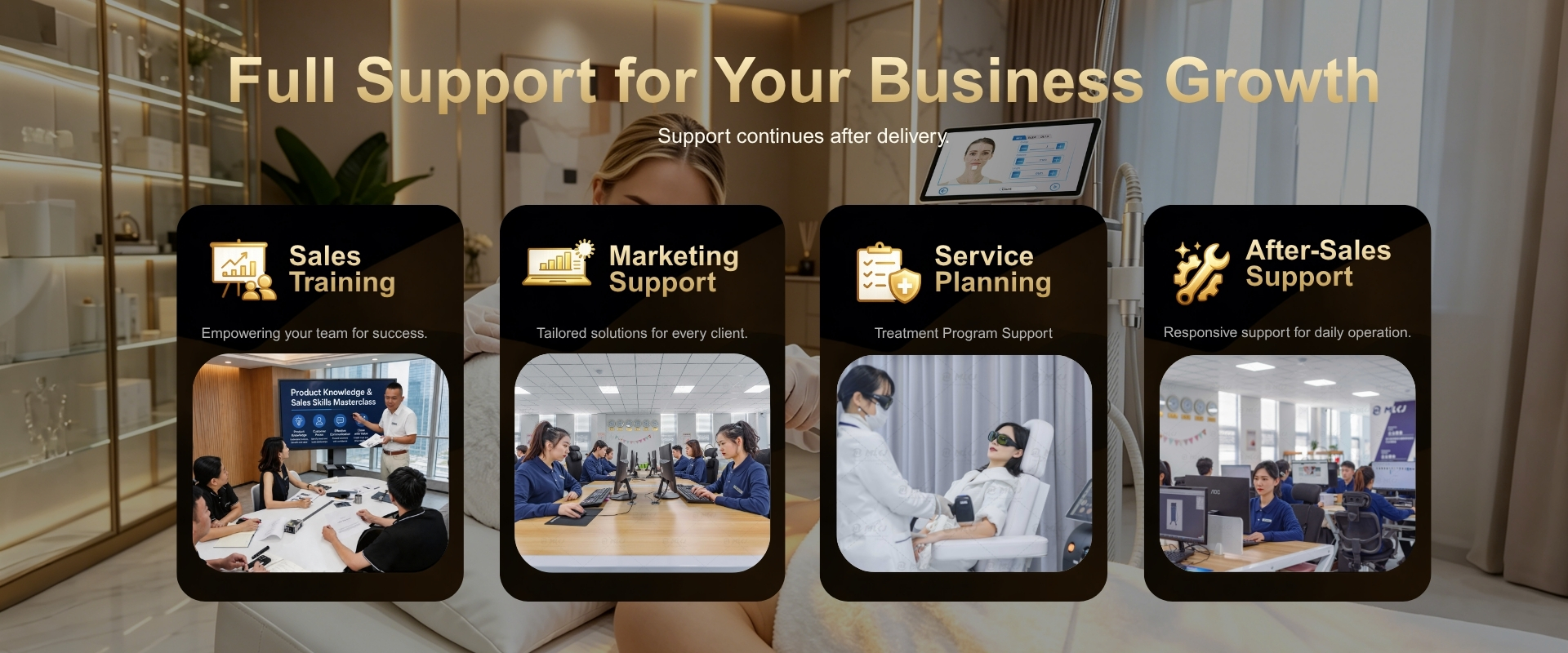
Whether training is a one-time delivery or part of long-term support
Whether software upgrades, parameter optimization, and troubleshooting are handled promptly
For commercial equipment, after-sales service is not an added bonus. It is part of the purchasing decision.
A device with a slightly higher price but mature after-sales support is often far more cost-effective than a cheaper machine with no reliable service behind it.
In 2026, clinics purchasing energy-based aesthetic equipment can no longer focus only on whether the machine “works.” They must also pay attention to compliance and traceability.
FDA regulation of laser products and related medical laser devices involves both medical device pathways and laser radiation safety requirements.
In addition, FDA-recognized consensus standards also include basic safety and performance requirements for medical and aesthetic laser equipment.
Weifang Mingliang Electronics is a source manufacturer focused on the research, development, and manufacturing of aesthetic devices, continuously helping partners achieve long-term profitability.
Our products have been sold to more than 160 countries and regions, serving over 60,000 beauty salons and 5,000 distributors, with nearly 1 billion treatment cases contributing to improvements in skin and body conditions.
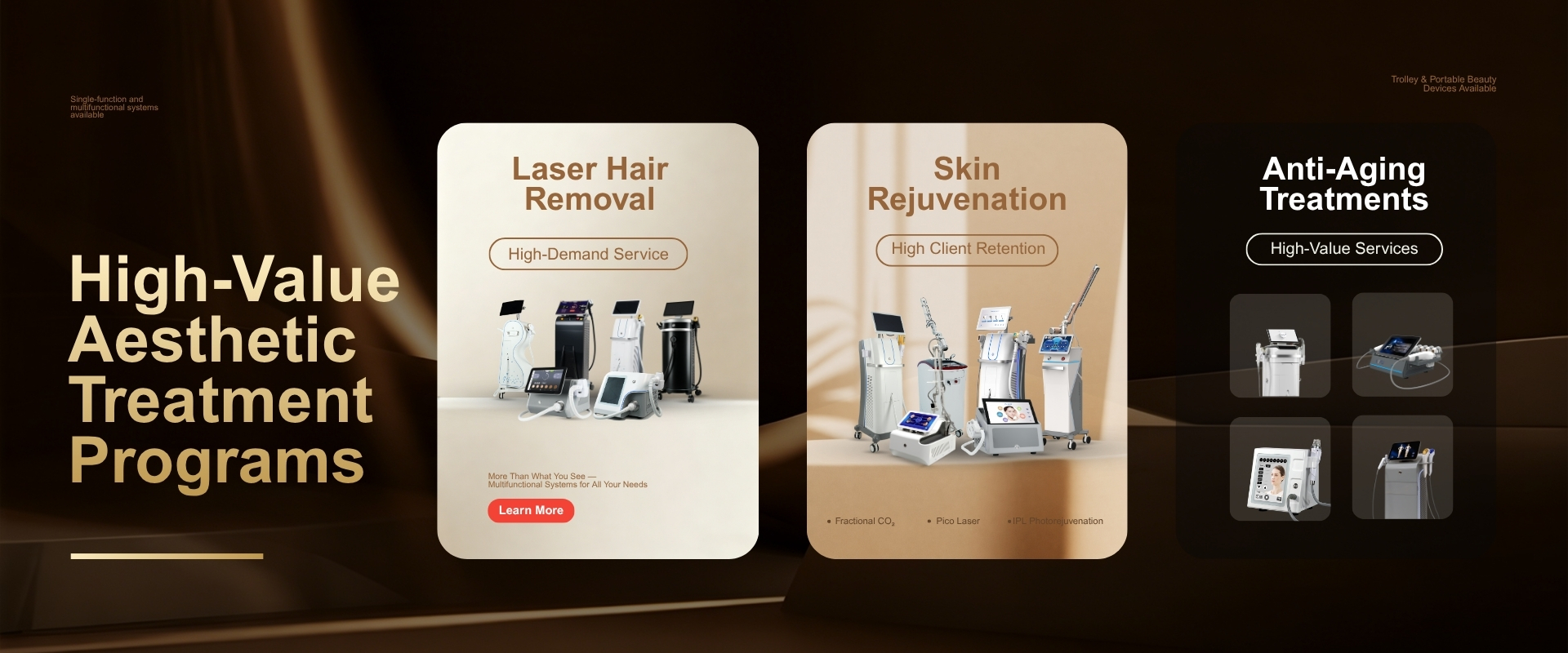
Our devices adopt a modular design and one-touch parameter settings, allowing operators to get started quickly. The product range covers hair removal, skin rejuvenation, whitening, mole removal, scar treatment, vascular lesion treatment, muscle toning, body sculpting, and fat reduction.
On the manufacturing side, we implement strict quality management, maintaining a failure rate of less than 0.001%, effectively reducing after-sales pressure. Our full product line has obtained certifications such as CE, FDA, EU MDR, and MDL.
With five overseas warehouses, 3-day shipping response, and 24-hour online support, we provide comprehensive support for OEM/ODM customization and exclusive regional distribution, helping partners expand their business steadily through multiple cooperation models.
TEL: +86 15965364558
...
...
...

We are always here to help you out and provide you with solutions. Should you have any special requirements or inquiry, please fill the form below and we will get back to you as soon as possible.